
How to Check Criminal History in Lynchburg
Begin a Lynchburg criminal history search with the document you need, not with a broad name hunt. A Lynchburg police incident report, jail intake, municipal citation, court case, and SLED history are separate public products. Official sources establish that a Lynchburg Police Department has existed, yet the research sweep found no verified current town website, records desk, form, blotter, app, or crime map. That Lynchburg access gap makes the agency name on a report or citation especially useful.
Use this order to keep the Lynchburg search tied to the right public office:
- Read any citation, receipt, bond paper, or report header and confirm whether Lynchburg Police or another agency created it.
- Search the Lee County Public Index with a name or known case number before adding optional filters.
- Try the official traffic ticket search for a citation, then call Lee Magistrate Court when no reliable Lynchburg municipal entry appears.
- Call Sumter-Lee Regional Detention Center for present custody or recent booking and use the Lee court that handled bond for judicial records.
- Use SLED CATCH only when a South Carolina fingerprint-supported history is the needed product, and confirm gaps against the court and local agency.
Lynchburg Criminal Records and Access Gaps
Lynchburg is Lee County's only incorporated town besides Bishopville. The 2020 Census counted 318 residents within about 1.1 square miles. Those Lynchburg facts help separate this South Carolina town from same-name search results elsewhere. They do not measure Lynchburg crime or the number of Lynchburg criminal records. The absence of current town statistics also cannot be read as zero crime, zero arrests, or no police activity.
A narrow Lynchburg official trail is still workable. Searchers should include South Carolina and Lee County in queries, reject Lynchburg, Virginia results, and rely on government domains. If a Lynchburg agency name is unclear, start with the Lee County Sheriff's Office at 803-484-5353. Ask whether it is the custodian or can identify the agency that made the Lynchburg report. Do not use a historical post office box as though it were a current police address.
Note: A missing town webpage is an access limitation, not evidence that a Lynchburg criminal record does not exist.
The Lynchburg Police Department
Official South Carolina public-safety and Attorney General sources establish the Lynchburg Police Department historically. They do not supply a current verified desk address, direct phone, records form, portal, email, hours, app, or blotter. A responsible Lynchburg police-record search must keep that limit visible. It should not borrow contact facts from another town, rely on an old mailing address, or confuse a commercial directory with the public custodian.
When paperwork identifies Lynchburg Police as the originating agency, retain the exact incident date, place, report number, officer or agency notation, and record type. Use those Lynchburg details when asking the Lee County Sheriff whether it can route the inquiry. For a formal request, describe the specific Lynchburg incident or arrest record and ask which public body has custody. The South Carolina Freedom of Information Act permits a custodian to redact exempt material, but it also supports access to releasable portions of public records.
Lynchburg, state, and county systems remain separate. SLED may hold a fingerprint-linked Lynchburg arrest entry, while a Lee court holds a filed charge and disposition. Neither system becomes the Lynchburg police narrative merely because the local request channel is hard to verify.
When a Lynchburg Arrest Agency Is Unclear
A Lynchburg event may involve town police, the Lee County Sheriff, a state traffic agency, SLED, or another law-enforcement body. The Lynchburg record belongs first to the agency that created it. Location alone does not make every Lynchburg report a sheriff's report. Check the agency seal, citation prefix, report header, court case agency, and any booking or bond paper before sending a request.
The Lynchburg agency distinction affects both speed and content. The arresting agency keeps the incident and arrest narrative. Sumter-Lee creates Lynchburg booking and custody records after transport. The court records the filed charge, hearings, plea, disposition, and sentence. SLED's repository receives fingerprints and later court outcomes. For a broader discussion of those separate custodians, the Lee County arrest history resource follows the full booking chain.
| Clue | Best Lynchburg record route |
|---|---|
| Police report or incident number | Originating agency, with Sheriff routing help if needed |
| Traffic citation | Official ticket search, then the named court |
| Booking or custody question | Sumter-Lee Regional Detention Center |
| Filed criminal charge | Lee Public Index and the correct Lee court |
| Statewide identity history | SLED CATCH, checked against source records |
Arrests and Bookings in Lynchburg
No verified Lynchburg city jail appears in official sources. A custodial Lynchburg arrest routes to the Sumter-Lee Regional Detention Center at 1250 Winkles Road in Sumter. The center's main number is 803-436-2340. This cross-county route is normal for Lee detainees. It explains why a person arrested in Lynchburg may require a Sumter custody call while the related charge and bond remain Lee County records.
The Lynchburg research found no safe, current official online roster. An older official inquiry was unreachable, and another current-looking Sumter-branded page showed Florida-formatted data. Neither supports a promise of live Lynchburg booking results. For Lynchburg custody, call the regional center or inspect recent-confinement records as allowed by state law. For older material, submit a focused public-records request to the detention center and the arresting agency.
A Lynchburg booking entry reports an allegation and custody event, not guilt. Charges can change after prosecutor review. Pair Lynchburg arrest material with the later court file before reaching any conclusion. Lee Bond Court handles Lynchburg bond information even when the person is physically held in Sumter.
Why Lynchburg Booking Records Lead to Sumter
For Lynchburg, Lee County has no separately listed adult detention center. The regional Lynchburg arrangement sends arrestees to Sumter-Lee for intake. Booking creates a second set of records beyond the Lynchburg police file, including identity checks, fingerprints, charge and bond data, property inventory, screening, and custody status. Not every field is public. Medical, protective, security, victim, juvenile, and active-investigation details may be withheld or redacted.
Lee judicial work does not move to Sumter merely because custody does. A South Carolina Supreme Court order confirms that Lee magistrates may use video for specified proceedings involving Lee defendants confined at the regional center. This can include initial appearances, bond hearings, contested motions, pleas, and sentencing in covered matters. The practical result is split custody and court records.
Record path: Lynchburg arrest › Sumter-Lee booking › Lee Bond Court › correct Lee trial court.
Lynchburg Municipal Court Records
Judicial reports name “Lynchburg Municipal,” but the current Lee County court directory does not provide a Lynchburg municipal court block. No current judge, street address, counter hours, phone number, or fee can be stated from the available official sources. Try the Lee Public Index and the South Carolina traffic ticket search first. If neither resolves the Lynchburg matter, call Lee Magistrate Court at 803-484-6463, Bond Court at 803-428-6762, or the Lee Clerk at 803-484-5341 for routing.
The Judicial Branch Magistrate Court directory shows the verified Lee fallback. Its directory view is reproduced below so a searcher can recognize the official source.
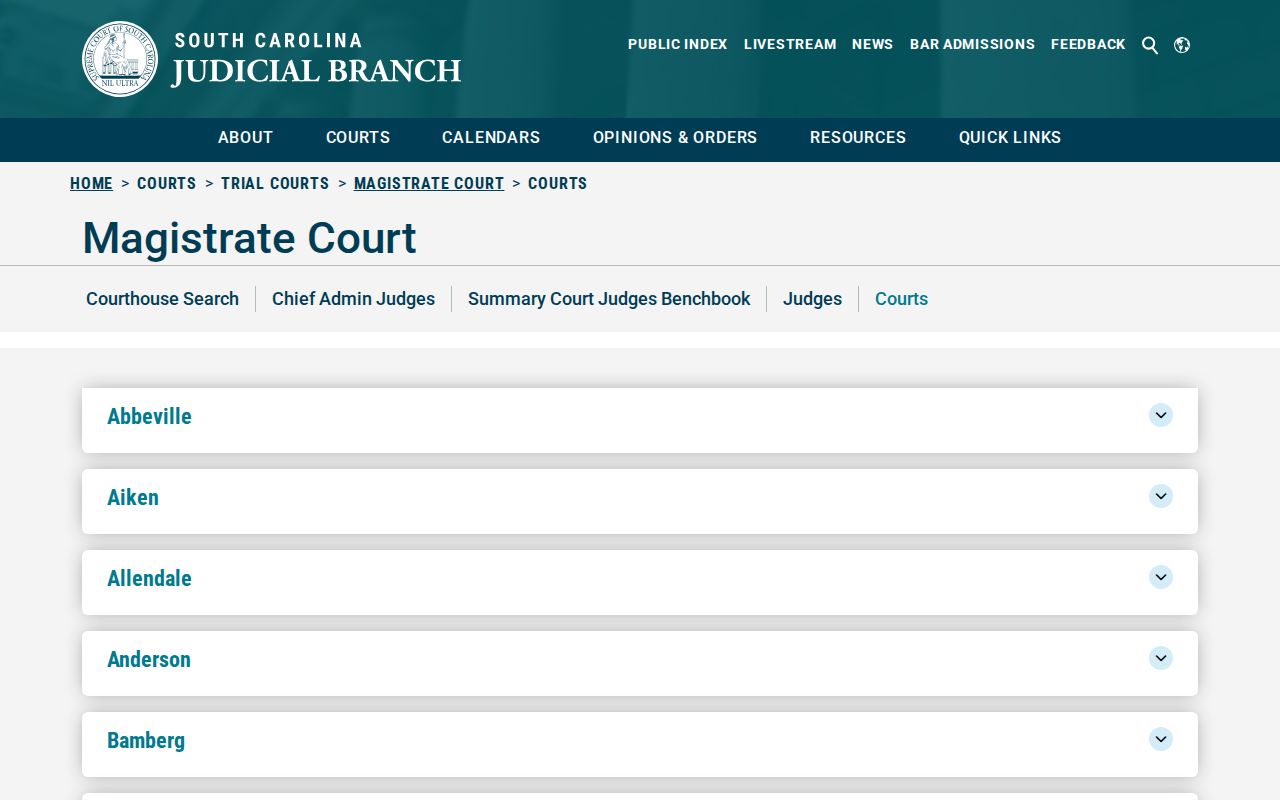
The image supports the Lee Magistrate contact route; it does not establish a current Lynchburg municipal counter or judge.
| Court Name | Lynchburg Municipal is named in judicial reports, but no current directory block was verified |
|---|---|
| Case Types Heard | Town matters shown by the citation or court record; specific current jurisdiction details were not published |
| Case Lookup Channel | Lee Public Index and Traffic Ticket Search, followed by Lee Magistrate, Bond Court, or Clerk routing |
| What the Docket Shows | Only fields actually returned by the official court channel; no private Lynchburg sample was inspected |
| Copies & Fees | Ask the verified record custodian; no current Lynchburg copy schedule was located |
Search Lynchburg Court Records First
The Lee Public Index is the strongest online starting point for a filed Lynchburg criminal case. Search a Lynchburg case by its known number when possible. With only a name, begin with few fields because added criteria work together and one wrong filter can suppress a match. Lee General Sessions numbers use YYYYGS31 followed by five digits. Summary numbers use YYYYA31 followed by eight digits.
The portal does not guarantee complete Lynchburg municipal coverage. It also removed home addresses from existing and new case entries beginning January 1, 2026. A Lynchburg browser error, no match, sealed matter, or municipal participation gap requires a phone or counter follow-up. It does not establish a clean record. A certified or older Lynchburg case file comes from the clerk or proper court, not from a screenshot of search results.
For help reading charges, docket steps, and outcomes, consult the full Lee County criminal court case records explanation after identifying the correct Lynchburg venue.
Where Lynchburg Records End Up
A Lynchburg report begins with the agency that handled the incident. If an arrest occurs, the regional center creates the booking file and submits fingerprints through the South Carolina chain. The appropriate Lee court then maintains the judicial case. SLED's Computerized Criminal History unit processes arrest, custody, and later disposition data sent by agencies and courts.
Record flow: Lynchburg Police Department › Lee County Courts › South Carolina Law Enforcement Division.
This line describes the broad Lynchburg criminal record path, not a promise that each stage is complete at the same time. SLED reported a major direct-indictment fingerprint gap in July 2026. Names, aliases, dates of birth, missing fingerprints, and delayed dispositions can also cause differences. Compare a court result with SLED CATCH when reviewing your own record, and ask the originating office to resolve a conflict.
Lynchburg Fingerprints and SLED Records
South Carolina law requires covered arrest fingerprints to reach SLED within three days, excluding weekends and holidays. That fingerprint step is what helps connect a Lynchburg arrest to the correct statewide identity. A direct indictment or event without properly linked prints can appear in court yet remain absent from the repository. This is why one no-result screen cannot answer every Lynchburg criminal history question.
For Lynchburg, CATCH is a paid, name-based view of South Carolina repository information. It is not a Lynchburg incident report, current booking roster, warrant search, national history, or sex-offender registry. The search uses last name, first name, date of birth, and an optional Social Security number. SLED says the first three use “starts with” matching. More than one possible person can trigger special processing.
For a Lynchburg self-review, compare the SLED result with the court file and local report. If the disposition differs, use the certified case record in a challenge to SLED. Fingerprint cards are available through authorized channels, including local law enforcement or IdentoGO, but no Lynchburg enrollment site was verified.
Request Lynchburg Records Without a Town Form
No official Lynchburg records-request form or local fee schedule was found. A focused written request under the South Carolina Freedom of Information Act is the safe fallback after identifying the custodian. State the agency, record category, event date or range, location, and report, booking, citation, or case number if known. Ask for electronic delivery, a written cost estimate, and releasable portions with lawful redactions.
Do not assume the Sheriff holds every Lynchburg town record. Ask first whether that office is the Lynchburg custodian or can route the request. The regional detention center handles booking files, the correct Lee court handles case records, and SLED handles the state repository. The Act allows exemptions for active investigations, fair-trial concerns, privacy, confidential sources, techniques, safety, sealed matters, and juvenile records.
The South Carolina General Assembly's FOIA chapter is the controlling source. The captured statute page below helps distinguish that official law from summaries on unrelated sites.
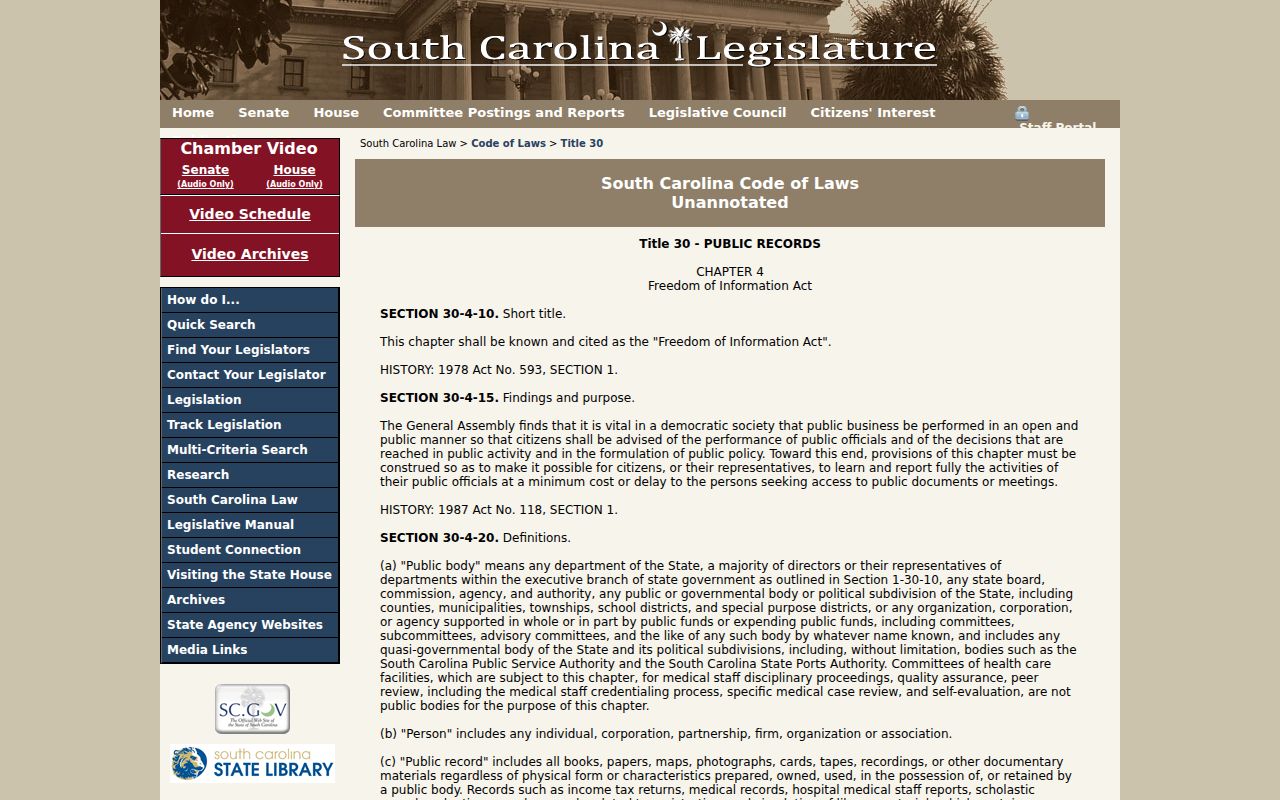
The statute image reinforces the request route, while the agency receiving a Lynchburg request still decides what it holds and what may be released.
Public Access Rules for Lynchburg Records
Lynchburg police and court access turns on the type of record and its custodian. South Carolina FOIA opens public-body records but does not erase statutory limits. Law-enforcement files may be redacted when release would disrupt a proceeding, impair a fair trial, invade privacy, expose a confidential source or method, or create a safety risk. Sealed, expunged, juvenile, victim-protective, and other confidential material remains restricted.
The state dissemination framework also separates police, court, and SLED products. Fingerprints submitted under Section 23-3-120 support repository identity matching. Court files show what was filed and decided. An incident report remains with the agency that created it. Request the Lynchburg record from the office that owns that product and verify any uncertain status there.
Key Statutes:
South Carolina Freedom of Information Act sets public-record access duties and exemptions.
S.C. Code §23-3-120 governs fingerprint submission that supports the state criminal-history repository.
S.C. Code §17-1-40 restricts public access after qualifying dismissals, discharges, or not-guilty outcomes.